
You’re halfway through a sandwich when a back tooth sends up a sharp twinge. It’s not dramatic, but you stop chewing and shift the food to the other side. Then you test the same tooth again, just to check, and the pain is right there waiting.
Ten minutes earlier it felt completely fine.
Tooth pain when biting doesn’t always come with a visible cavity or a swollen gum. The tooth can look perfectly normal, and you may be able to drink hot coffee without a flinch. If you’re looking for a dentist in Vaughan because chewing has become uncomfortable, you’re likely wondering how worried you should be.
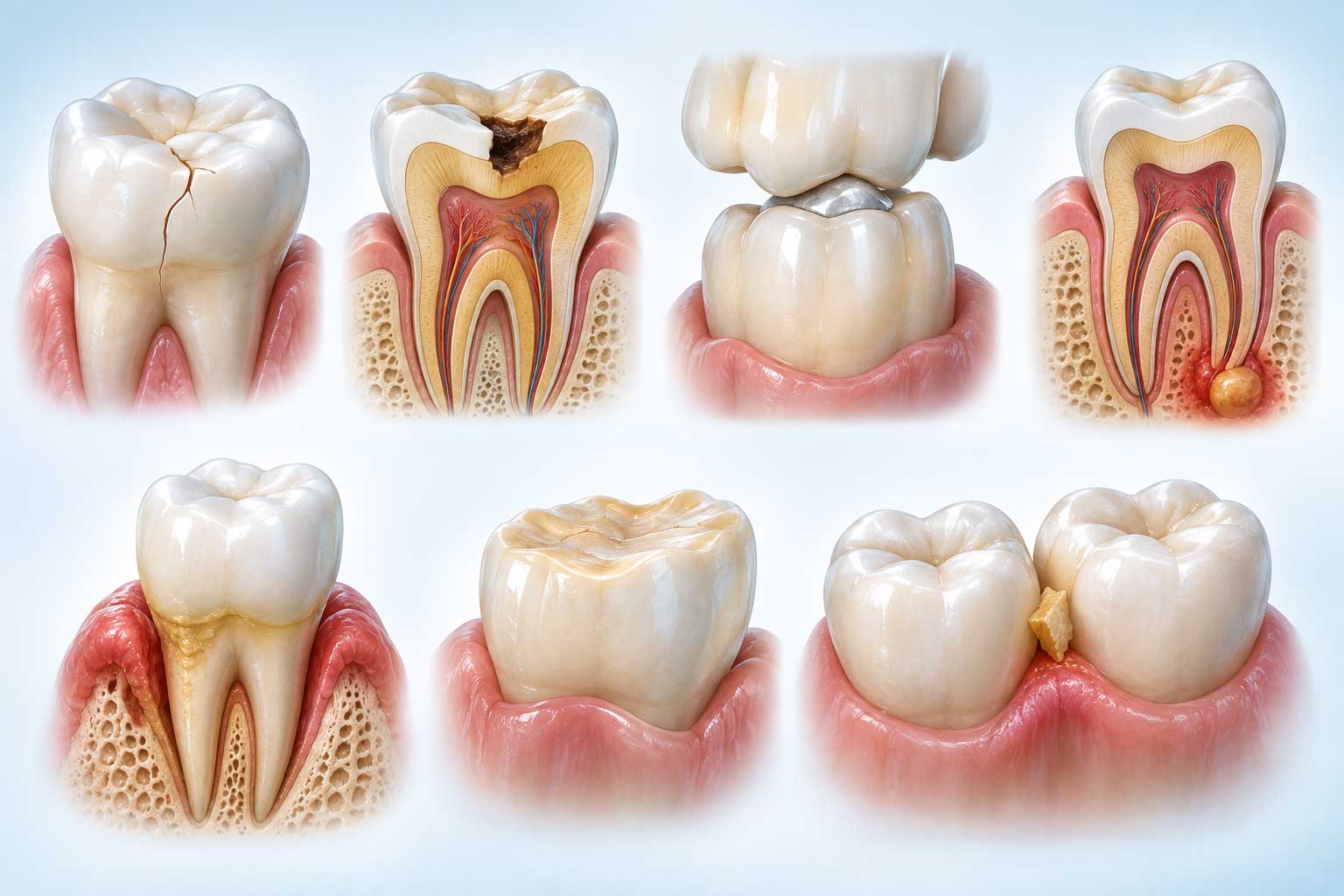
The cause isn’t always obvious. A hairline crack, an older filling, or the way your top and bottom teeth meet can each be enough. Here are seven common causes and the clues that point to each one.
1. A Small Crack in the Tooth
It doesn’t take a hard blow to crack a tooth. An unpopped popcorn kernel can do it. So can years of grinding, or a tooth that’s been weakened by a large filling. Many cracks are too fine to see in the mirror.
When you bite, the cracked sections can shift slightly and irritate the sensitive tissue inside. The result is usually a quick, sharp pain, and sometimes it’s worse when you let go of the bite than when you press down. It may vanish for days and then return, which is why people tend to put it off.
A crack doesn’t automatically mean losing the tooth. Depending on where it sits and how deep it runs, a crown or root canal treatment may help save the tooth. Some cracks, though, are too extensive to repair. The goal is to catch it before it spreads.
2. Decay You Haven’t Noticed
Cavities don’t always announce themselves with a toothache. Decay often grows slowly between teeth or underneath an old filling, where you can’t see it. By the time chewing hurts, it may have been there for a while.
You might get a sudden sting from a piece of toast, or find that the same tooth has started reacting to cold water. Neither of those means the nerve is infected. A small cavity may only need a filling, though decay that reaches the pulp (the soft tissue inside the tooth) calls for more involved treatment.
A cavity doesn’t heal because the pain fades. If one tooth keeps bothering you, have it checked instead of quietly chewing on the other side.
3. A Filling or Crown That Changes Your Bite
If the pain started soon after a dental appointment, mention it when you call. A new filling or crown can sit slightly higher than the teeth around it, so that tooth hits first and takes more force than it should. Many people describe it as one tooth touching before the rest. It might feel mild at breakfast and a lot worse by dinner.
When that’s the cause, a small adjustment is often enough to make biting comfortable again. But a high filling isn’t the only reason a tooth hurts after dental work. Temporary sensitivity or inflammation inside the tooth can do the same thing. If chewing is still uncomfortable after a recent filling or crown, contact your dental office in Vaughan so someone can take a look.
4. Inflammation or Infection Around the Root
This one is frustrating because the tooth can look healthy on the outside. Inside every tooth is the pulp, a bundle of nerves and blood vessels. A deep cavity, an injury, or a crack can damage it, and when the pulp becomes badly inflamed or infected, the tissue around the root often turns tender.
That can show up as a deep ache when you chew, or a feeling that the tooth sits a little higher than its neighbours. Some people get throbbing pain. Others notice swelling or a small bump on the gum. Symptoms like these need professional attention, particularly if infection is a possibility.
Treatment depends on the diagnosis. It may include a root canal, drainage, or, when a tooth can’t be saved, removal. If you’re researching a root canal in Vaughan, keep in mind that pain when chewing doesn’t mean you’ll need one. Your dentist first has to find out whether the pulp is involved and whether the tooth can be restored.
5. Gum Problems
Sometimes the trouble isn’t in the tooth at all. Your gums, ligaments, and the bone around each tooth all help absorb the force of chewing. When long-standing inflammation damages those tissues, biting can start to hurt.
Look for bleeding when you brush, bad breath that won’t go away, or tenderness around a single tooth. In more advanced cases a tooth may feel loose, or your bite may feel different than it used to.
Gum disease is often painless in its early stages, which is exactly why regular checkups matter even when your teeth feel fine. If your gums keep bleeding, or one spot feels off when you bite, let your dentist have a look.
6. Grinding or Clenching Without Knowing It
If you sometimes wake up with a sore jaw, you may be grinding your teeth in your sleep. Plenty of people also clench during the day, usually while staring at a screen, sitting in traffic, or concentrating on something stressful.
All that pressure adds up. Over time it can leave teeth sensitive, wear down fillings, and contribute to cracks. The pain is hard to pin down, since sometimes one tooth aches and other times several do. Morning headaches and a tight feeling in the jaw are common clues.
A Vaughan dentist can check your teeth for wear patterns and tell you whether grinding is part of the problem. If you grind your teeth at night, your dentist may recommend a custom night guard to help protect them.
7. Food Stuck Between Your Teeth
It sounds too simple, but it happens a lot. A popcorn husk or a shred of meat wedges between two teeth, you brush and rinse and hope for the best, and the gum gets irritated. Then every bite pushes food against that tender spot.
Often a careful pass with dental floss is all it takes. Skip the toothpick or anything sharp, since it’s easy to hurt the gum even more.
If food keeps catching between the same two teeth, don’t brush it off. A cavity, a damaged filling, or a change in the spacing between teeth could be behind it, and repeated irritation is worth having examined.
Does the Timing of the Pain Matter?
It does, because the pattern gives your dentist useful clues. A sudden sting when you release a bite can point to a cracked tooth. Pain that began right after a filling may mean the bite needs adjusting. A lingering ache, especially with swelling or temperature sensitivity, can suggest something deeper.
Still, different problems can feel almost identical, and you can’t reliably tell a cracked tooth from an infected root based on pain alone. At the appointment, your dentist will usually examine the tooth and surrounding gums, test your bite, and check how it responds to temperature. X-rays help with some problems, though very fine cracks often don’t show up on them.
What to Do While Chewing Hurts
Stop testing the sore tooth. It’s tempting to keep biting down to locate the pain, but repeated pressure won’t help a tooth that’s cracked or already irritated.
Stick to softer foods until you can be seen, and avoid hard nuts, ice, and sticky candy. Keep brushing gently and clean between your teeth with care, especially if you think food is trapped. A warm saltwater rinse can soothe irritated gums. If you need pain relief, a pharmacist can help you pick an over-the-counter option that suits you. Don’t put aspirin directly on the tooth or gum, because it can burn the tissue.
These steps may make you more comfortable, but none of them will repair a cavity, a crack, or an infection.
When Is Tooth Pain an Emergency?
An occasional twinge isn’t necessarily an emergency. But pain that returns every time you bite is not something to get used to. Book an exam if the discomfort keeps coming back, a tooth feels loose, or a filling or crown looks damaged.
Get urgent dental advice if you develop severe pain, a fever, a bad taste along with swelling, or a swollen face. A dental infection can sometimes spread beyond the tooth. If you’re searching for an emergency dentist in Vaughan, describe your symptoms when you call, and the office can tell you about availability and what to do next.
One situation can’t wait for a dental visit. If swelling makes it hard to breathe or swallow, call 911 or go to the nearest emergency department right away.
Frequently Asked Questions
Why does my tooth hurt when I bite down but not when I drink something cold?
Pressure and temperature affect teeth in different ways. A crack, a damaged filling, or inflammation around the root can cause pain with chewing and little or no cold sensitivity.
Can a tooth hurt when biting even if there’s no cavity?
Yes. Cracks, grinding, gum problems, and changes in your bite can all cause pain without any decay.
Does sharp pain when I release my bite mean the tooth is cracked?
It can be a clue, but it isn’t a diagnosis. Your dentist will need to examine the tooth and rule out other causes.
Why does my tooth hurt after a new filling?
The filling may be interfering with how your teeth meet, or the tooth may simply be sensitive or inflamed for a short time. Contact your dentist if biting hurts.
Can tooth pain when biting go away without treatment?
Mild gum irritation may settle once trapped food is removed. Cavities, significant cracks, and infections generally won’t clear up without dental care.
Will I need a root canal if chewing hurts?
Not necessarily. A bite adjustment, a filling, or a crown may be the better option. A root canal is considered when the pulp is irreversibly damaged or infected.
How soon should I see a dentist if the pain keeps coming back?
Book an appointment soon instead of waiting for constant pain. Severe symptoms, fever, or swelling may need urgent assessment.
Don’t Ignore Pain That Keeps Coming Back
It’s easy to get used to chewing on one side, especially when the pain comes and goes. But if the same tooth keeps hurting, there’s probably a reason worth looking into.
You don’t have to figure out whether it’s a crack, a cavity, or something else on your own. That’s what a dental examination is for.
If you’re looking for a dentist in Vaughan, Marble Dental Centre welcomes patients from Vaughan, Woodbridge, and nearby communities. Dr. Navid Milani and the team provide dental examinations and treatment for patients dealing with tooth pain.
To ask about an appointment, call +1-905-303-0066.
Sources and Further Reading
American Association of Endodontists (AAE) – Cracked Teeth: Symptoms and Treatment
National Institute of Dental and Craniofacial Research (NIH) – Tooth Decay: Causes, Symptoms, and Treatment
National Health Service (NHS) – Dental Abscess: Symptoms and Urgent Care