Retainers 101: Keeping Teeth Straight After Invisalign
You’ve finished your Invisalign and you love your new smile—now comes the secret to keeping it that way: retainers. Think of your retainer as your “save” feature after months of orthodontics. Teeth are not set; the fibers around your teeth and bite muscles have a kind of memory. If you don’t wear a retainer, those structures can gradually pull teeth back toward their original positions. In this guide, we talk about how retainers work, what types are available, how long to wear them, and practical care tips—all so your investment keeps paying dividends.
How retainers keep teeth straight
During orthodontic treatment, bone reshapes around teeth as they move. Once you remove your aligners, that bone needs time to stabilize. A retainer holds your teeth in their new positions while the supporting tissues adjust. Early on, even skipping a few nights can allow slight shifting; consistent wear is what secures the result you worked hard for.
The three main types of retainers
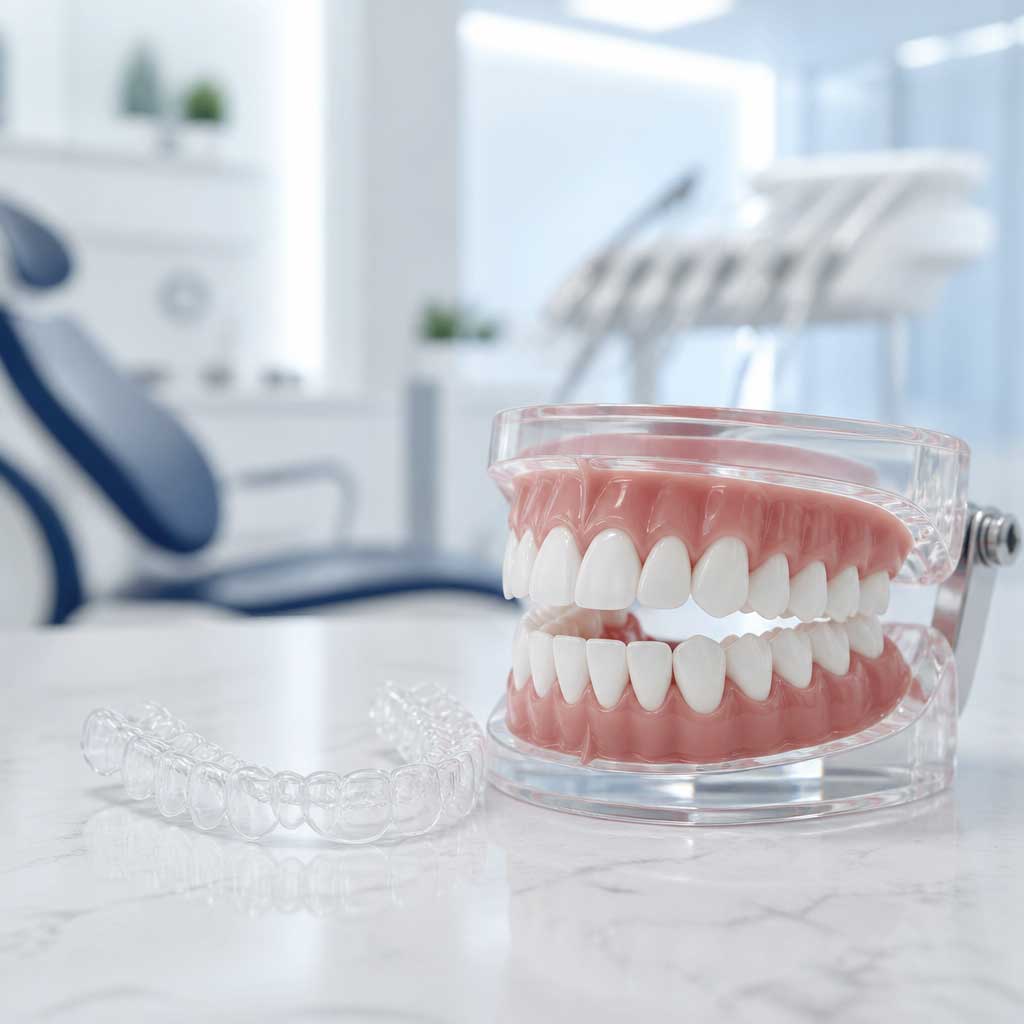
1) Clear removable retainers (Essix/Vivera-style).
These thin, transparent trays look like Invisalign but are sturdier. They’re nearly invisible, comfortable, and great for nightly wear. Downsides: they can warp with heat (never use hot water), and they may wear out faster if you grind your teeth.
2) Hawley retainers (acrylic + wire).
The classic option uses an acrylic base fitted to your palate and a slender wire across the front teeth. They’re durable, adjustable, and allow the bite to settle naturally. The look is more noticeable than clear trays, and some people need a brief period to adapt their speech.
3) Fixed/bonded retainers.
A thin wire attached to the back of the front teeth (usually canine-to-canine) works 24/7 without you thinking about it. These are excellent for long-term stability, particularly for lower front teeth. You’ll need extra attention to flossing and hygiene, and sometimes a clear nighttime retainer is paired with the fixed wire for added stability.
How long should you wear retainers?
There’s a simple rule: “Nighttime for a lifetime.” The schedule is personalized, but a common plan after Invisalign is:
Months 0–6: full-time wear (about 20–22 hours per day), removing only to eat, drink anything other than water, and clean.
Months 6–12: transition to night-only, every night.
Year 2 and beyond: continue night-only wear; most patients keep a consistent routine long-term (for example, 5–7 nights per week).
If you miss time and the retainer feels tighter the next day, that’s a sign your teeth started to shift—resume regular wear and call your dentist if it doesn’t settle within a day or two.
Daily care and cleaning
Rinse and brush gently with cool water and a soft toothbrush after each removal. Use a mild, fragrance-free soap or foam cleanser; don’t use toothpaste on clear retainers (it can scratch).
Deep clean 1–2× per week with non-bleach retainer tablets as directed.
Always use a ventilated case. Pockets and napkins are where retainers go to disappear (and where pets find them).
Keep away from heat. Hot water, dashboards, and dishwashers can warp clear retainers.
For fixed retainers: floss with threaders, interdental brushes, or a water flosser around the wire. Your hygienist can show you a quick two-minute routine.
Common issues (what to do)
It doesn’t fit like it used to. Don’t force it. If it feels too tight or won’t fully seat, call your dental office—minor adjustments or a new scan may be needed.
It cracked or chipped. Stop wearing a sharp retainer and bring it in. If the crack is minor and it still seats comfortably, use it as a short-term backup only.
You lost it. Call immediately. The sooner we scan and replace, the less chance of movement (especially within the first six months).
Bad odor or “funk.” Usually biofilm build-up. Step up daily cleaning and add a weekly soak.
Sports & grinding. Use a dedicated mouthguard for contact sports (not your retainer). If you clench or grind, ask about a more durable nightguard-style retainer.
Retainers and lifestyle tips
Water only while wearing—acidic or sugary drinks can pool under a clear retainer and increase the risk of staining or demineralization.
Remove for meals. Keep it in the case—never in a napkin.
Travel wisely. Pack a labeled case and a spare if you have one; keeping an older retainer as a backup helps.
Expect a brief adjustment. A day or two of extra saliva or a slight lisp is normal, especially with Hawley retainers.
Cost, replacements, and backups
Retainers protect the smile you’ve already invested in. Clear retainers typically need periodic replacement due to normal wear and tear; bonded wires can last years but may need repair if a bond lifts or breaks. Many patients choose to keep a backup clear retainer—useful for travel or if one goes missing.
Why choose Marble Dental Centre for retention?
Retention isn’t one-size-fits-all. At Marble Dental Centre in Vaughan, we tailor your plan to your bite, habits, and goals. Whether you choose a clear tray, a Hawley, a bonded retainer, or a combination, we’ll explain the pros and cons and show you a cleaning routine that fits your day. If you’ve been searching for a dentist near me to maintain your Invisalign results, our team offers practical, evidence-based guidance backed by modern dentistry in Vaughan at a trusted dental office in Vaughan and patient-oriented dental centre Vaughan. Our holistic dentist Vaughan approach supports long-lasting comfort and aesthetics. Many patients consider us among the best dentist in Vaughan for clear, step-by-step retention care.
Ready to lock in your new smile?
See how a personalized retainer plan keeps your Invisalign results stable. Book with Dr. Navid Milani at Marble Dental Centre—your modern, patient-first choice in Vaughan. Call +1-905-303-0066 today to keep your smile straight for the long haul.